
By ReNew Dental Surgery | April 1, 2026
Corrective jaw surgery or orthognathic surgery is a major procedure used to improve both function and aesthetics. It is often recommended for people with misaligned jaws, trouble chewing, speaking, or breathing, or for individuals with facial injuries. The surgery is performed by oral surgeons, who reposition the upper, lower, or both jaws to improve alignment.
For El Monte residents, corrective jaw surgery is a beneficial treatment that can significantly improve the quality of life and overall health. If you are considering corrective jaw surgery, being informed about what to expect before, during, and after surgery will help you feel more comfortable and prepared. This guide will walk you through each stage of the process.
Corrective Jaw Surgery Preparation
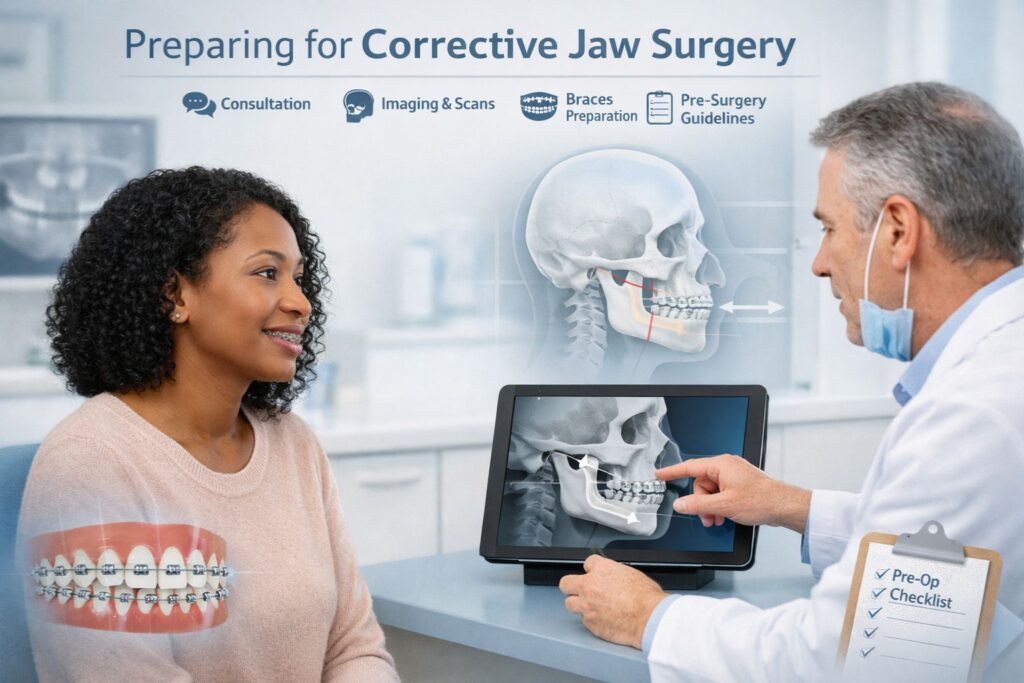
Corrective jaw surgery, as critical as it is to the patient’s improvement, should be given as much consideration as the surgery itself. During this time, you will need to prepare your mind and your body for the operation. There are a few steps that you will be guided through in order to prepare for your jaw surgery procedure:
Here are the necessary pre-surgical steps:
- Consultations with Your Oral Surgeon: You will sit down and have an in-depth discussion with your oral surgeon about your previous medical conditions, as well as what the goals of your surgery will be and the treatments available to you.
- Imaging and Testing: You will need to have X-rays taken of your mouth to ensure a thorough understanding of your jaw’s structure, so your jaw can be placed in the best possible position. 3-D scans may also be required.
- Braces Application: It will be determined whether braces are necessary before surgery to ensure the jaw is properly aligned post-operatively.
- Pre-Surgery Instructions: During the weeks prior to your surgery, you will be given clear instructions as to what medications to refrain from taking and the use of alcohol and smoking.
These pre-operative procedures allow for proper jaw alignment.
What Happens During Your Corrective Jaw Surgery
Your oral surgeon will conduct the corrective jaw surgery in El Monte while you are under general anesthesia. Several parts of the surgery you are to expect:
Some key elements during the corrective jaw surgery are:
- General Anesthesia: While performing the surgery, oral surgeons will make sure you’re comfortably asleep and unconscious, so you will have no memory of the surgery or be able to feel the pain.
- Incisions Inside the Mouth: Oral surgeons make cuts in the patient’s mouth, so no visible scarring will be present.
- Jaw Relocation: Your jaw will be moved into the correct position and then secured into place with screws, plates, or wires.
- Other Surgeries: Sometimes, an oral surgeon will perform additional surgeries alongside jaw surgery, such as bone grafting or chin enhancement.
The actual surgery will last from two to five hours, depending on its complexity.
Jaw Surgery Recovery Process
It’s important for the long-term outcomes to follow post-surgery recovery properly. Below is some information you will want to know to support your healing after corrective jaw surgery.
Recovery after jaw surgery:
- Initial recovery: You will be monitored as you emerge from anesthesia and should expect some discomfort and swelling, which you can manage with pain medication. Ice packs should also be applied during this stage.
- Soft-food diet: The first few weeks of healing involve eating foods that are easy to chew, such as soup, yogurt, and applesauce. The food helps to keep the mouth from moving around and putting pressure on the healing bone.
- Braces: If you were already wearing braces, you will continue visits with your orthodontist to align your teeth.
- Pain management: Bruising and swelling will subside gradually. Make sure to follow your surgeon’s instructions carefully to ensure the fastest and fullest recovery.
- Follow-up appointments: After surgery, you will have several follow-up appointments to ensure your jaw heals properly.
The recovery period can last several months, but many patients begin to feel substantially better within the first few weeks after surgery. The difference is often noticeable in jaw functionality and appearance.
When is Corrective Jaw Surgery Needed?
Corrective jaw surgery is an excellent option to remedy certain health and aesthetic problems, and it has the potential to change your life significantly. There are many conditions involving the jaw that have lasting detrimental effects on a person’s overall health and daily comfort that often go untreated due to a lack of awareness regarding surgical solutions. If you’re suffering from any of the below, you might be a candidate for corrective jaw surgery.
When corrective jaw surgery is needed:
- Chronic jaw pain: If you constantly feel pain in your jaw, especially while you’re chewing or speaking, the surgery could help your jaw function normally, and thus the pain would subside.
- Problem with biting/chewing: If your upper and lower teeth aren’t lining up properly for biting and chewing, corrective jaw surgery can help resolve this issue.
- Speech problems: Inability to pronounce certain words and slurring could be attributed to jaw misalignment, and surgery may alleviate the condition.
- Frequent locking/popping: If your jaw locks up or you hear a click or pop when you open and close your mouth, it’s a sign that the bones might need adjustment, and surgery could help correct it.
- Breathing problems: Malocclusion may cause breathing issues; in some cases, this can result in snoring or sleep apnea, which may improve with surgery.
- Visible facial discrepancies: Asymmetry or disparity between the upper and lower jaws may be considered a cosmetic concern but can also indicate underlying skeletal problems that may be corrected through surgery.
It’s advisable to meet an oral surgeon if any of the above symptoms relate to your symptoms.
ReNew Your Smile and Jaw Function
Corrective jaw surgery can offer an immense enhancement in your health and confidence. It addresses both aesthetic issues and functional problems that can occur with your jaw; overall, making a dramatic improvement in your quality of life.
At ReNew Dental Surgery, we can guide you through every aspect of your corrective jaw surgery, from consultation to post-operative care. If you’re ready to take the first steps toward a more functional and beautiful jaw, contact us today for a consultation.
Questions People Ask About Corrective Jaw Surgery
1. How long does recovery take after corrective jaw surgery?
Recovery can take anywhere from 6 to 8 weeks for the initial healing, but complete recovery, including jaw alignment and orthodontic adjustments, may take up to 12 months. Regular follow-ups will monitor progress.
2. Can I eat solid foods after corrective jaw surgery?
For the first 6-8 weeks, you’ll need to follow a soft-food diet. As your jaw heals and swelling reduces, your oral surgeon will guide you on when to resume eating solid foods.
3. How painful is corrective jaw surgery?
Pain is manageable and usually felt as discomfort or mild pain after surgery. Swelling and bruising are common, but pain medications and ice packs will help you through the recovery phase.
4. Will I need braces after surgery?
Yes, most patients require braces before and after surgery to align their teeth. Your orthodontist will adjust the braces as needed throughout the recovery period to ensure proper alignment.
5. Are there any risks involved with corrective jaw surgery?
As with any surgery, there are risks, such as infection or nerve damage. However, these complications are rare, and your surgeon will take every precaution to minimize any risks during the procedure.
6. How do I care for my mouth after jaw surgery?
After surgery, you’ll need to follow your surgeon’s post-op care instructions. This includes using saltwater rinses, avoiding hard foods, and maintaining gentle oral hygiene to promote healing and prevent infection.
Related Articles
Schedule Your Consultation With Us Today!
Don’t wait to enjoy a confident, healthy smile. Contact us today to schedule your consultation and take the first step toward lasting results. Our friendly team is ready to guide you every step of the way.