By ReNew Dental Surgery | March 17, 2026
Not everyone with a misaligned jaw needs surgery. But for some people, it’s the only option that actually fixes the problem — not just masks it. If you’ve been told your bite issues, jaw pain, or breathing difficulties can’t be solved with braces alone, corrective jaw surgery might be exactly what your dentist or oral surgeon has been hinting at.
What Is Corrective Jaw Surgery?
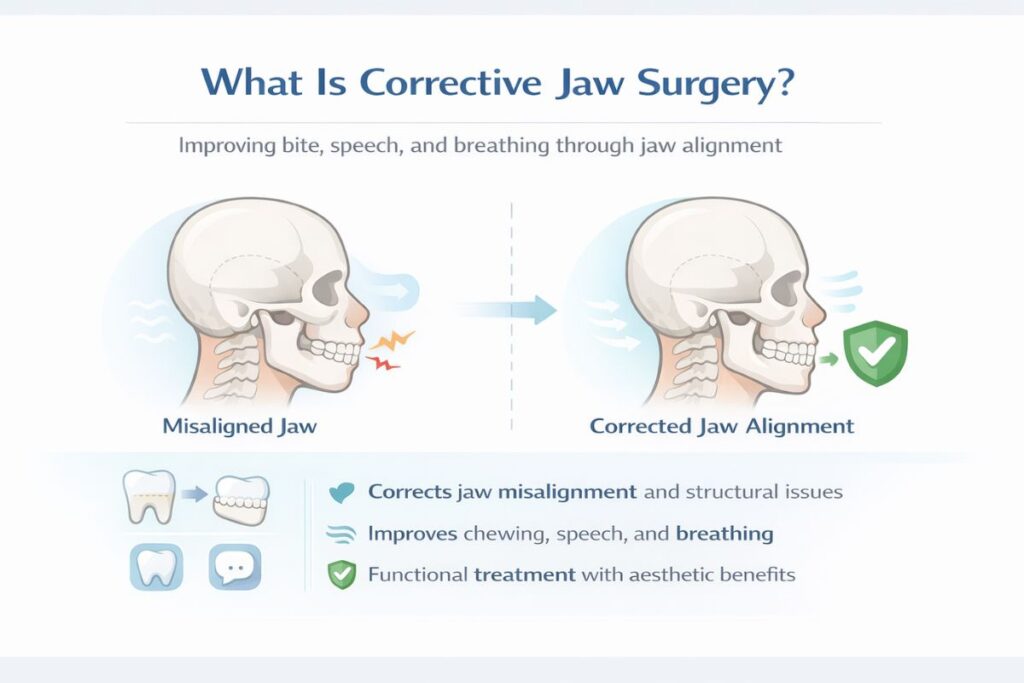
The surgical procedure known as orthognathic surgery, or corrective jaw surgery, moves your upper and lower jaw bones to correct structural deformities that can disrupt your ability to bite and chew, speak, and breathe.
The procedure serves a purpose different from cosmetic surgery, but it can improve facial appearance as an unintentional result.
Orthognathic treatment in El Monte has become increasingly popular as people in the area seek permanent solutions beyond standard orthodontic treatments. Patients in the San Gabriel Valley initially believe their concerns relate to their appearance. Still, they eventually discover an underlying functional problem that has been affecting their normal activities.
Signs You Might Be a Candidate
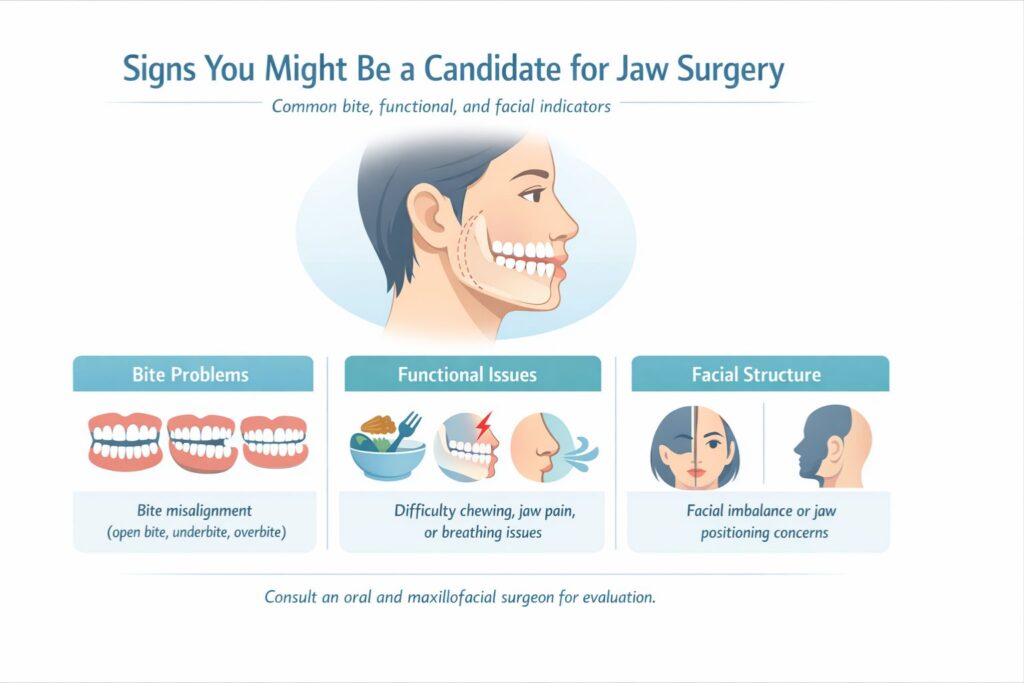
You don’t need to self-diagnose. But these are the conditions that most commonly lead to a jaw surgery referral:
Bite Problems
- Open bite — your front teeth don’t touch when your mouth is closed
- Underbite — lower teeth sit in front of upper teeth
- Severe overbite — the upper jaw protrudes significantly over the lower jaw
Functional Issues
- Difficulty chewing or biting into food
- Chronic jaw pain or TMJ-related discomfort
- Mouth breathing due to structural airway problems
- Speech difficulties linked to jaw positioning
Facial Structure
- Noticeably asymmetrical face or jaw
- Receding chin or protruding jaw that braces haven’t corrected
If you’re checking multiple boxes here, a consultation with an oral and maxillofacial surgeon is a practical next step.
Who Qualifies — The Real Criteria
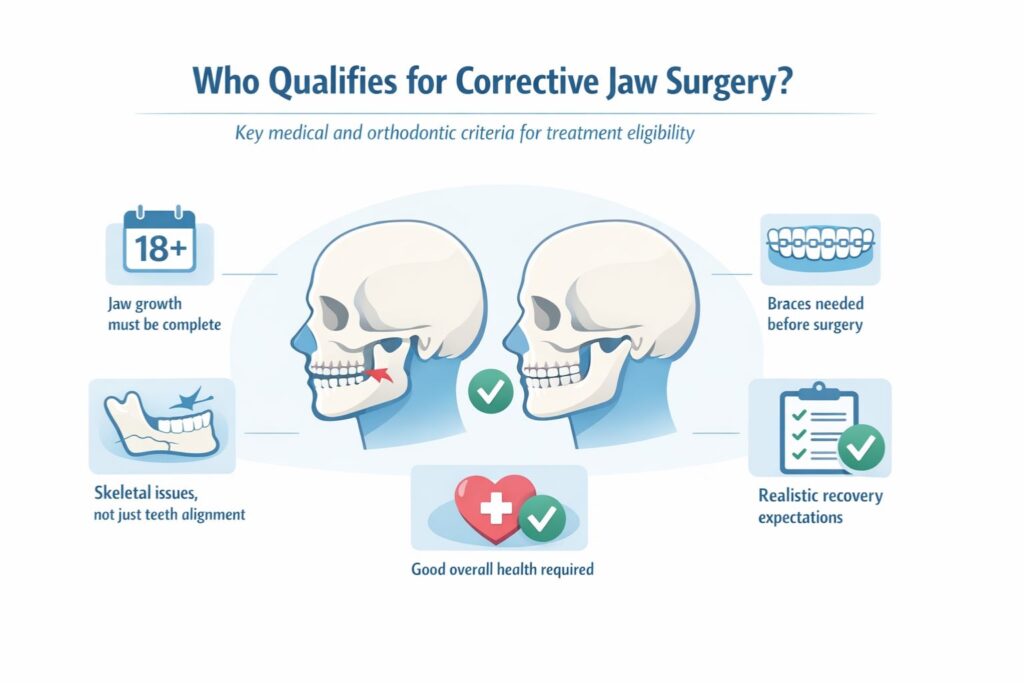
The desire for surgery stands as an insufficient reason to proceed with the procedure. Doctors need specific medical conditions which they must identify before they can suggest surgical treatment:
1. Jaw growth must be complete: Surgery is typically not performed until the jaw has stopped growing — usually around age 17–18 for females and 18–21 for males. The risk of postoperative jaw movement increases with earlier surgical interventions.
2. Orthodontic preparation is needed: Most patients wear braces for 12–18 months before surgery. This dental procedure establishes proper tooth alignment, enabling jaw repositioning to achieve complete harmony of the dental structure.
3. The problem can’t be solved with braces alone: Orthodontics moves teeth. Surgery moves bone. Braces become ineffective when you have skeletal problems because your jaw needs proper alignment.
4. You’re in good overall health: Like any surgical procedure, general health matters. Doctors need to handle patients who have uncontrolled diabetes, bleeding disorders, or active infections before they can proceed with their medical care.
5. Realistic expectations: Recovery takes time. Most patients need to stay away from work and school for two to three weeks while they follow a liquid and soft-food diet during their post-operative recovery period. Patients who understand this tend to have better outcomes.
What the Process Looks Like
An overview of the procedure could be outlined this way:
- Consultation: The orthodontist will refer you to an oral surgeon. Prepare for the surgery by completing models, imaging, and digital planning.
- Pre-surgical orthodontics: Braces will be placed on the teeth to re-position them before the jaws are moved.
- Surgery: Performed under general anesthesia, typically in a hospital setting. The surgeon makes internal incisions — no visible facial scarring.
- Recovery: Swelling may take 1-3 days following the procedure to reach its maximum, then begin to subside over the next month. The majority of visible swelling will subside within 6-12 weeks after the procedure; however, full healing may take 12 months or longer from the date of the operation.
- Post-surgical orthodontics: Further adjustments will continue to be made to ensure the bite is correct after surgery.
From initial consultation through final orthodontic adjustment, the procedure will take 18-24 months or longer, depending on the individual patient.
Making the Right Decision
Undergoing corrective jaw surgery is not something that can happen easily or in one day. It will require the services of many different professionals, as well as careful planning. In addition to these factors, prospective patients must also be willing to undergo surgery. There are definite long-term benefits for patients who undergo corrective jaw surgery: proper chewing and breathing, a balanced appearance, and long-term jaw health.
If you’re based in El Monte and have questions about whether you’re a candidate, an in-person evaluation gives you far more clarity than any online resource.
Your Next Step Starts Here
ReNew Dental Surgery provides services throughout the El Monte area and beyond to help people with jaw problems. Our team will evaluate the person’s face, jaw, posture, teeth, and mouth before making a diagnosis, and can guide the person through the entire process of getting jaw surgery. We keep track of patients from the moment they first speak with a representative until they have fully recovered from orthognathic treatment in El Monte.
If you have been having bite problems, jaw discomfort, or functional issues that do not respond to traditional orthodontics, you might need a complete assessment to determine if you could have jaw surgery.
Call ReNew Dental Surgery today or visit the website to schedule your consultation. The right information from the right provider changes everything.
Common Questions People Ask
1. How do I know if I need jaw surgery or just braces?
If your bite issue is caused by the position of the jawbone itself — not just misaligned teeth — surgery is likely needed. Your orthodontist can assess this with imaging.
2. At what age can someone get corrective jaw surgery?
Typically, after jaw growth is complete, around 17–21, depending on the individual. Earlier surgery increases the risk of relapse as the jaw continues to develop.
3. How long is the recovery from orthognathic surgery?
Most patients return to normal activities within 3–6 weeks. Full wound healing takes up to 12 months, though swelling typically reduces within 6–8 weeks.
4. Will I need braces after jaw surgery?
Yes, in most cases. Post-surgical orthodontics refines the bite and ensures teeth align properly after the jaw has been repositioned.
5. Is corrective jaw surgery safe?
It is a well-established procedure performed by oral and maxillofacial surgeons. Like any surgery, risks exist — including swelling, numbness, and infection — but serious complications are rare.

Schedule Your Consultation With Us Today!
Don’t wait to enjoy a confident, healthy smile. Contact us today to schedule your consultation and take the first step toward lasting results. Our friendly team is ready to guide you every step of the way.